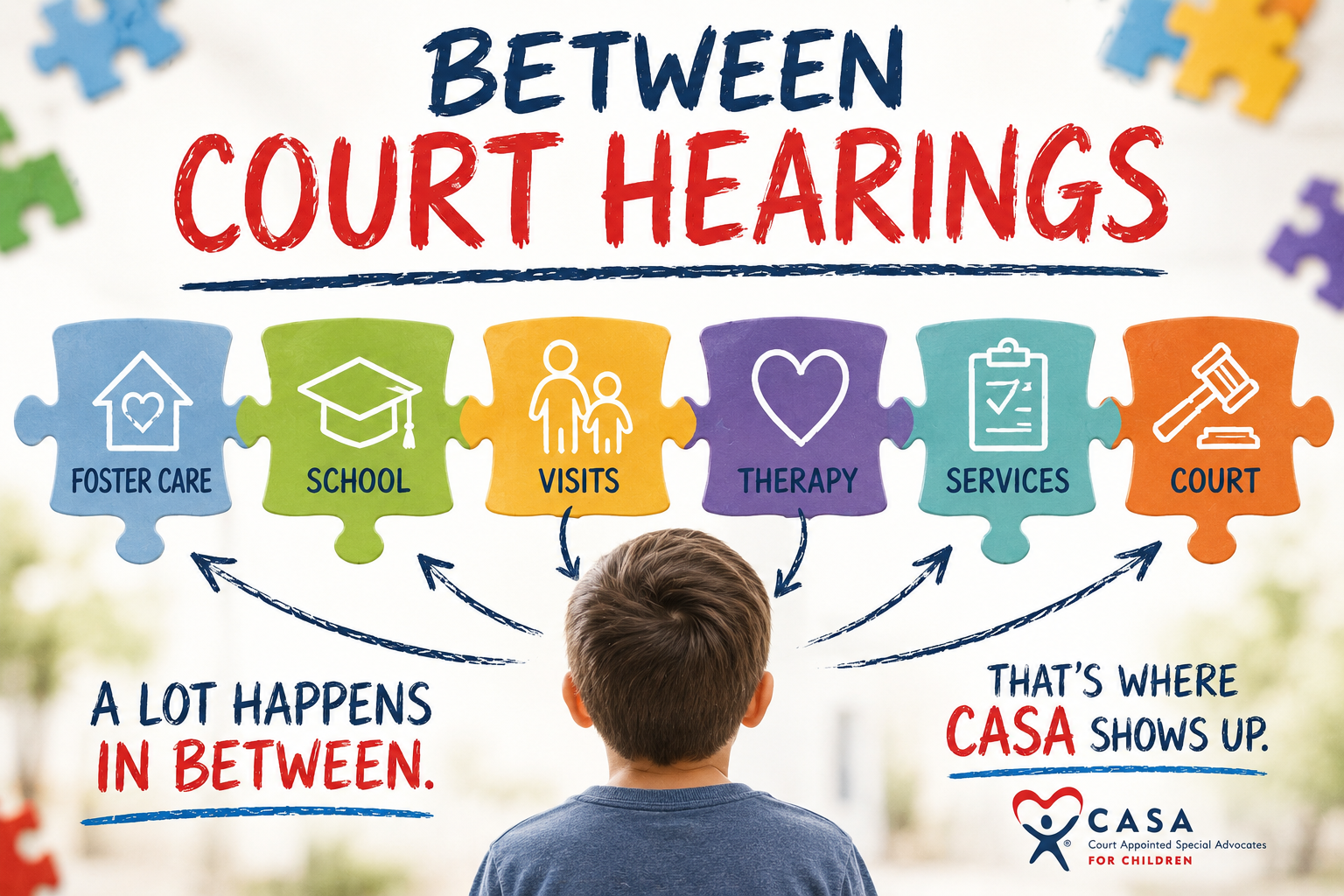

What Happens Between Court Hearings?
When people think about CASA, they often picture a volunteer sitting in a courtroom advocating for a child.
Court hearings are an important part of a child welfare case—but they are only a small part of the work.
In fact, much of CASA advocacy happens during the days, weeks and sometimes months between court hearings.
The Case Keeps Moving
A child's life doesn't stop while everyone waits for the next court date.
Children go to school. They attend therapy. They visit with parents and siblings. They adjust to placements. Parents participate in services and work toward their case goals. Providers make recommendations. Circumstances change.
And CASA continues paying attention.
Between hearings, CASA volunteers visit their assigned children and gather information from the people involved in their lives. Depending on the case, that may include parents, caregivers, teachers, therapists, DCS, visitation supervisors and other service providers. Sometimes those conversations confirm that things are going well. Other times, they identify concerns that may need additional attention between court hearings.
Following Up Matters
A large part of advocacy is simply making sure the things discussed in meetings and court actually happen.
Was a referral made?
Did a child begin the recommended service?
Is parenting time progressing as expected?
Is the child receiving the educational support they need?
Has something changed since the last hearing?
CASA volunteers don't make these decisions, but they can ask questions, gather information and help ensure important issues remain visible. They also have an opportunity to see something that can be difficult to capture in a single court hearing: patterns over time. Progress matters. Consistency matters. Setbacks matter. Changes in a child's behavior or well-being matter. All of that information helps create a clearer picture of how a child and family are doing.
Preparing for the Next Hearing
As the next court date approaches, CASA takes what has been learned and brings it back to the court.
CASA reports provide the judge with independent information about the child, developments in the case and recommendations regarding the child's best interests.
Those recommendations aren't based solely on what happens on the day of court. They are informed by the visits, conversations, meetings, records and follow-up that happened in the weeks and months beforehand.
Advocacy Happens Every Day
Court hearings may be where important decisions are made, but the story behind those decisions is happening every day.
It happens in classrooms and therapy offices. During parenting time and home visits. At team meetings and appointments. Through phone calls, emails and conversations. And, most importantly, in the everyday life of the child at the center of the case.
At CASA of Jefferson County, our volunteers understand that meaningful advocacy requires more than showing up for court.
We show up for everything in between, too.